Nicaragua Solidarity Coalition News 7.14.2026: Foreign Minister in Iran; Cardinal Brenes Dismisses Persecution Fake News; One Million Tourists in 2026; Cuba and Venezuela Webinars
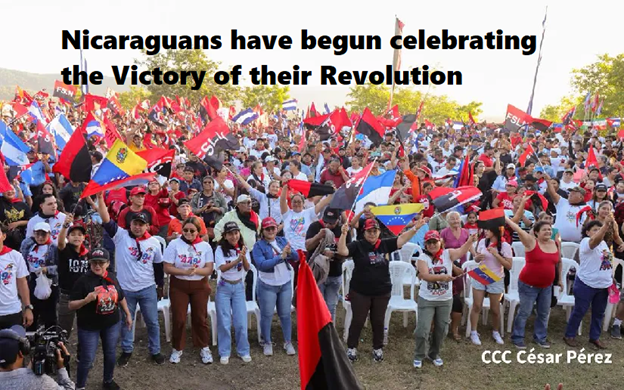
Ben Grosscup: Despite U.S. Hybrid Warfare and Sanctions, Nicaragua’s Socialist Government is Building Infrastructure and Providing Services at Impressive RateI had just spent three weeks traveling in Nicaragua, most of that time with a delegation organized by Casa Ben Linder. Members of the Black Alliance for Peace, which promotes the anti-war, anti-imperialist, and pro-peace positions of the radical Black movement, were also essential in making the trip possible. Nicaragua is not a wealthy country, battered by U.S.-sponsored hybrid warfare, including punishing economic sanctions, military interventions, and more. Despite this, since the Sandinista Front returned to power in 2007, the Nicaraguan state is building public infrastructure and providing services for poor people who had been neglected for hundreds of years. This includes new water systems, affordable public transit, free university education, and rural electrification. Meanwhile, in the United States, our own public systems are crumbling or being sold off to private corporations.
Starting to reverse Nicaragua’s long history of social and infrastructural neglect, under both the Somoza dictatorship and the neo-liberal period, has required a political commitment to invest in the people, manifested concretely through a political party wielding state power. Today, the US is suffering its own infrastructural and economic decline, as that same logic of privatization has been applied at home for decades by both major political parties. Nicaragua’s example suggests that political will—manifested through organized state power—can reverse decades of neglect.
An urgent question for progressive politics in the United States is whether we have the courage to establish a new political formation and political consciousness outside the two-party duopoly, that is committed to providing the services and infrastructure the people of the U.S. need.
(Iranian Students News Agency) Nicaraguan Foreign Minister Valdrack Jaentschke traveled to Tehran to Attend the Tribute ceremony for the martyred leader of the Islamic RevolutionThe Nicaraguan Foreign Minister, accompanied by Javier Lara Bustamante, the president of Nicaragua's student association, extended the deep condolences and solidarity from the President, government, and people of Nicaragua.. He expressed his condolences over the martyrdom of the leader of the Islamic Revolution, along with several officials and citizens, during the imposed American-Zionist war. Commending the resilience and steadfastness of the Iranian government and people against military aggression and economic pressure, Jaentschke emphasized that the government and people of Nicaragua hold a special respect for Iran's principled stance in resisting US bullying and illegal pressures against independent nations.
In Report to the Pope, Nicaragua Cardinal Brenes dismisses fake news against the Church After the Archbishop of Managua personally informed His Holiness about the reality of the Catholic Church in Nicaragua and announced the submission of photographs and videos of the celebrations to demonstrate the participation of the faithful, it is clear that the false accusations of alleged persecution against the Church are baseless. In Nicaragua, there is freedom of worship and freedom of faith; it is the propagandists of hate and those subservient to foreign interests who, through disinformation, seek to sow discord, manipulate religious sentiment, and threaten the peace of the country every day.
Nicaraguan Tourism Institute’s Ana Carolina García: We are approaching one million tourists visiting our country since last yearOne country that has seen a resurgence in visitors to Nicaragua is Australia. Australians love surfing; they have great beaches, but they say that Nicaragua has some of the best surfing beaches in the world… Russians have a different approach; they prefer luxury and enjoy staying in our excellent 4- and 5-star hotels in rural areas, which offer the kind of service they value. Asian tourists seek less sun, as they don't particularly like it, but they appreciate the natural beauty that provides shade. There's been tremendous growth in the Canadian market; compared to last month, there's been a 30% increase in Canadian visitors. Germany is our primary European market.
People can tell you, "In Nicaragua, I walk around peacefully, I can go anywhere, I can get around on my own," and it's true. The fact that 90% of tourists come independently; they arrive at the airport, take a taxi, a bus, or arrange their own transportation—that already tells you about the safety our country offers. It gives you a sense of security and peace of mind, and people from abroad tell you how much they love Nicaragua after they return home.
Stalin Vladimir Centano: The Sandinista Model - The Engine of a NationOne of the defining characteristics of the Sandinista Model is the concept of the People as President, conceived as a form of participation that seeks to involve the population in the country's main decisions….Citizen participation does not end with voting, but extends to neighborhoods, municipalities, communities, departments, regions, and cities, where institutions carry out their work alongside families and the various sectors of society. This ongoing contact has allowed the population to participate in the implementation and monitoring of government initiatives, strengthening a style of governance that strives to maintain close ties with the people beyond electoral processes. One of the ways Sandinismo envisions governing the country is through dialogue and consensus. This practice promotes the building of agreements among the government, workers, producers, entrepreneurs, cooperatives, and municipalities, so that key decisions respond to the needs of the population. The ongoing exchange among these sectors seeks to strengthen these agreements and support economic and social development based on shared understanding and objectives.
Stephen Sefton: Revolutionary Goals: Human Development and Poverty ReductionSince January 2007, the innovative processes initiated have progressively deepened the implementation of Sandinismo’s historic program. This is most evident first in the agricultural production sector and the inclusion of rural families with programs such as the Productive Bonus, in the exploration of non-traditional crops and the wide application of new techniques. Programs such as Usura Cero (Zero Usury) have ensured the increasing inclusion of women entrepreneurs in urban areas, an inclusion consolidated by initiatives such as the different Creative and Entrepreneurial Economy Programs and the promotion of national, regional and international tourism.
The national strategy of the Ministry of Education (MINED) focuses on activities of innovation and creativity in learning and constant teacher training. The University in the Countryside Program has brought free innovative university level education to rural students.
Public health is another area of national life that shows how the rights of the Nicaraguan people have been enriched and strengthened. The consolidation of the maternal prenatal center system, the national vaccination system and the volunteer brigade system all result from the health ministry’s commitment to opening up to constant exchange at the community level.
Nicaragua’s Family and Community Health Model has been exemplary as a model for the region and was recognized in 2024 by the Pan American Health Organization for its innovation in digital health. PAHO said, “Nicaragua stood out among 24 other countries, due to its leadership in working with the population, its demonstrated ability to mobilize resources, general and specialized knowledge, the challenges faced, the obstacles overcome and the novelty of the strategy’s approach, which serves as an example to other countries.”
Stalin Vladimir Centeno: Government of Reconciliation and National Unity, 19 years transforming Nicaragua“The Government of Reconciliation and National Unity [GRUN] was established on January 10, 2007…Its establishment marked the beginning of a new era led by the Sandinista National Liberation Front, following the period of neoliberal governments that ruled Nicaragua between 1990 and 2007. While the country was under the administration of three corrupt liberal governments, the FSLN participated in every election, retained control of several mayoral offices, and maintained its presence in political life. This period unfolded amidst electoral campaigns, reorganization processes, and the work carried out from the municipal governments, until the elections of November 5, 2006, returned the FSLN to power.” The short article then gives a summary of the GRUN’s work since 2007.
Trade unionist Flavia Ocampo describes what it means to have her own home, part of a dignified housing programme for those on low incomes Flavia Ocampo is a pharmacist, a trade unionist and FSLN activist who lives in a suburb of Managua. The area is called Villa Jerusalén Bismarck Martinez in memory of a municipal worker kidnapped, tortured and killed in the 2018 failed coup. Since 2007 the government has built or repaired over 150,000 houses for sale to low income families as a part of a commitment to providing dignified housing. Launched in 2019 with funding from the Chinese government, Villa Jerusalén Bismarck Martínez is much more than a housing project; it is a symbol of hope, dignity, and the restoration of rights of the 3,000 families whose lives have been transformed.
Nicaragua GDP first quarter 2026 Quarterly GDP registering a year-on-year growth of 6.1% (5.9% in the previous quarter). With this result, the average annual growth rate reached 5.8%. From a production perspective, the year-on-year evolution of GDP was driven by growth in mining and quarrying (24.0%), construction (16.7%), trade (15.8%), hotels and restaurants (9.8%), livestock (6.8%), financial intermediation and related services (5.2%), water (5.2%), and other services (7.8%), among other activities. However, declines were recorded in fishing and aquaculture (10.0%), electricity (3.9%), public administration and defense (-3.0%), and agriculture (-2.4%), among others.
Updates on Venezuela
Vijay Prashad: The Earthquake in Venezuela and the Politics of DisasterVenezuela is rebuilding amid an information war that obscures the effects of sanctions, frozen assets, and decades of US economic warfare – and turns human suffering into another pretext to discredit the Bolivarian process. Statement in collaboration with: International Peoples’ Assembly, ALBA Movimientos, Sociedad Patriótica, La Union Comunera, Fuerza Patriótica Alexis Vive, and Frente Francisco de Miranda. Myth One: Venezuela’s government has failed to respond effectively to the earthquake. Myth Two: The Venezuelan government is blocking humanitarian relief. Myth Three: Affected communities are being neglected by the Venezuelan government. Myth Four: US concern for Venezuela can be separated from US hybrid warfare. Myth Five: The earthquake proves that the Bolivarian process has failed.
LA Times (Mark Weisbrot of CEPR): Sanctions are making Venezuela’s earthquake toll so much worse More than 3,800 people have died in Venezuela’s June 24 double earthquake, with 16,700 injured, according to current government reports. A medical crisis has emerged for thousands of survivors, and 17,800 are homeless. At a time like this, Venezuelans and the international community shouldn’t have to fight for an end to the sanctions that have destroyed the nation’s economy and hobble its recovery, nor for the country to have access to the billions of dollars worth of assets that belong to it. But we do, because the role of sanctions and frozen assets has received far too little public attention.
From 2012 to 2020, Venezuela suffered what is likely the most severe economic contraction in a depression that has occurred without a war. Data from the International Monetary Fund show a 74% decline in its GDP during that time. This is a loss of income about three times larger than what people here in the United States experienced during the Great Depression of the 1930s. This was not a natural disaster like the earthquake, but a man-made one. IMF data show that 88% of this loss took place following U.S. economic sanctions that began in 2015.
Venezuela has crucial resources that it is not being allowed to access. The United States and Europe are blocking the nation from more than $11 billion dollars that Venezuela should legally have. About $4 billion is sitting at the Bank of England; it was frozen there from Venezuela’s Central Bank as part of a regime change effort in 2019, led by the United States. The United Nations now estimates that the post-earthquake reconstruction of Venezuela will cost about $37 billion, which is an enormous sum for this country, 33% of current GDP.
Upcoming Events:
July 16, 5 pm ET webinar: Latin America in Turmoil: The U.S. Drive for Hemispheric DominanceThe Council on Hemispheric Affairs Luis Britto García — intellectual, renowned Venezuelan writer, and university professor at the Universidad Central de Venezuela; Atilio Borón — Argentine writer and researcher affiliated with the Institute of Latin American and Caribbean Studies; Adolfo Pérez Esquivel — Nobel Peace Prize laureate, recognized for his enduring commitment to the defense of democracy and human rights, as well as a sculptor and draftsman. The “Trump Corollary” to the Monroe Doctrine constitutes an all-out offensive to impose U.S. political, military, and economic dominance over the Americas and secure privileged control over the region’s strategic resources. This offensive has already provoked popular resistance and indignation in Venezuela and among political and social movements in Colombia, Brazil, Mexico, Chile, and Uruguay.
July 16, 7 pm ET webinar: Cuba Under Siege: Understanding Cuba's Economic Measure and our work aheadCuban Ambassador to UN, Ernesto Soberon Guzman; Helen Yaffe, University of Glasgow, author of "We Are Cuba!”; Isaac Saney, Dalhousie University, Canada, leader in Canadian Network on Cuba
July 19, 11 am ET webinar: The “Venezuela Model” Hoax: Trump’s Phantom ConquestSince the US seizure of President Maduro on January 3, and the installation of Vice President Delcy Rodríguez as Acting President, Washington has trumpeted a “Venezuela Model”. It claims to have engineered a comprehensive regime change, delivering total control of the country and its resources. This webinar argues that the “Venezuela Model” is a hoax designed create the impression among the US electorate of a non-existent success and non-existent control over Venezuela. Unfortunately, it has also been widely accepted among sections of the left. María Páez Victor, Venezuelan-born sociologist and political analyst; Francisco Domínguez, secretary of the Venezuela Solidarity Campaign UK; Jesús Rodríguez Espinosa, editor of Orinoco Tribune; Arnold August, author, journalist, and political scientist.
July 22, 9am (Atlanta): All out to Atlanta for historic Uhuru 3 appeal!Oral arguments in the appeal of the landmark Uhuru 3 case will be heard by a panel of three judges at the Elbert P. Tuttle U.S. appeals courthouse in Atlanta, GA. The appeal was filed in June 2025 on behalf of Chairman Omali Yeshitela, Penny Hess and Jesse Nevel by the Uhuru 3 legal team.
July 28, 1:30 pm ET webinar: Venezuela Solidarity Campaign: Emergency in Venezuela - End all sanctions, give back the gold!Despite the earthquakes that have devastated Venezuela, 1000s of deadly US sanctions on Venezuela remain in place and Britain's theft of Venezuela's gold continues. Speakers: Fravia Marquez, advisor to Venezuela's National Assembly & spokesperson for the Cumbé Afro-Descendant Movement. Gerdul Gutierrez, Secretary of International Relations of the CSBT (Venezuela's trade unions); María Páez Victor, Venezuelan Sociologist; Jeremy Corbyn MP; Francisco Dominguez (VSC) & Kate Hudson (Campaign for Nuclear Disarmament)
July 30 (noon ET) webinar: Stopping U.S. Aggression Against Cuba This seminar will analyze the illegality of the U.S. threats to invade Cuba and change its government, the illegal U.S. blockade against Cuba, and steps the international community can take to prevent and punish U.S. aggression against Cuba. Speakers: Vladimir Mora Fonseca: Legal Adviser to Permanent Mission of Cuba to the UN; Alexis Ginarte Gato: President of National Union of Cuban Jurists; Carlos Villán Durán: Professor of International Human Rights Law, President of Spanish Society for International Human Rights Law; moderated by Marjorie Cohn
September 3, 10, 17, 23: Governing from Below: Nicaragua During the Neoliberal YearsFollowing the loss of the elections in 1990, Nicaragua's Frente Sandinista de Liberación Nacional (FSLN) vowed to “govern from below.” Over the next 16 years the FSLN worked closely with its grassroots base through unions, student groups, and social movements to influence the national government and eventually return to power. The FSLN’s experiences in opposition to neoliberal governance provide important lessons for activists around the world working to effect change.
Upcoming Delegations to Nicaragua: 2027 Casa Ben Linder Nicaragua Tours
Feb 13-19 Bird Brigade - birding in Solentiname and Rio San Juan
March 6-14 Power and Protagonism: Women in Nicaragua – meet with women in leadership roles - cooperatives, labor unions, peasant feminists, and artisans to explore gender equity in Nicaragua
April 22-30 Light and Legacy: Ben Linder Brigade – Commemorate 40 years since the assassination of U.S. solidarity worker Ben Linder by U.S.-funded contra forces. Learn about his work and celebrate his legacy and that of other internationalist heroes in northern Nicaragua and with an activity for families at Casa Ben Linder of the 1st Annual Ben Linder Circus Arts Festival.
May 21-June 1 Mayo Ya - Cultural tour to the Southern Autonomous Region of the Caribbean Coast of Nicaragua, which is the heart of Nicaragua's Indigenous and Afrodescendant communities. Enjoy Mayo Ya celebrations in Bluefields with marching bands and dancing in the streets. Visit an Afrodescendant Garifuna community to learn about their culture and education of their youth, take a trip to the Pearl Keys with white sand beaches in the turquoise waters of the Caribbean.
Nicaragua Solidarity Coalition: nicasolidarity.com
Monthly meetings of the Nicaragua Solidarity Coalition are held on Zoom on the second Monday of each month at 2:30pm Eastern/ 11:30am Pacific time. The next meeting will take place on Monday, August 10. Send email to NicaraguaSolidarityCoalition@gmail.com requesting Zoom access.
Sign up to receive the Nicaragua Solidarity Coalition bi-weekly newsletter, action alerts, event notifications: bit.ly/NicaSubs
Listserve: nicanet@googlegroups.com join at groups.google.com/g/nicanet
Weekly NicaNotes (featured article & news briefs):https://afgj.org/signup
Facebook: Friends of Sandinista Nicaragua, Nicaragua Solidarity Coalition
Twitter: @SolidarityNica
Instagram: @NicaSolidarity
YouTube: @nicaraguasolidaritycoalition
